Wing foil
Wing foil puts a handheld inflatable wing in your hands and a hydrofoil under a short board. You learn wing grammar, foil pitch, depth discipline, and how to fall away from carbon. This guide goes from beach routine to flight, track setup, wing sizing, gusty thermals, touch-and-go, heel vs toe, equipment budget, plateaus, and self-rescue — with the same weather map on /weather.
25 sections · study map
What wing foil is
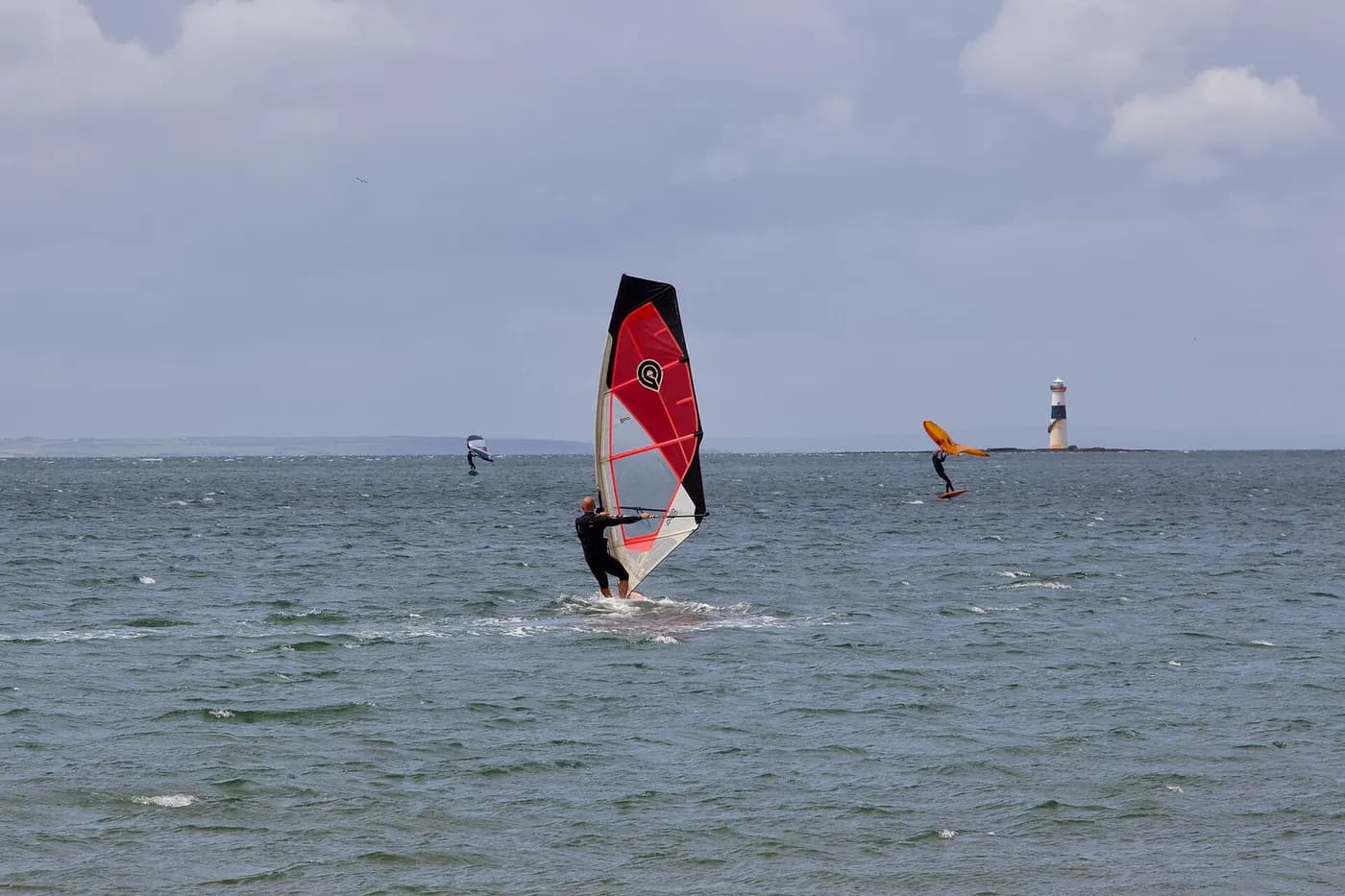
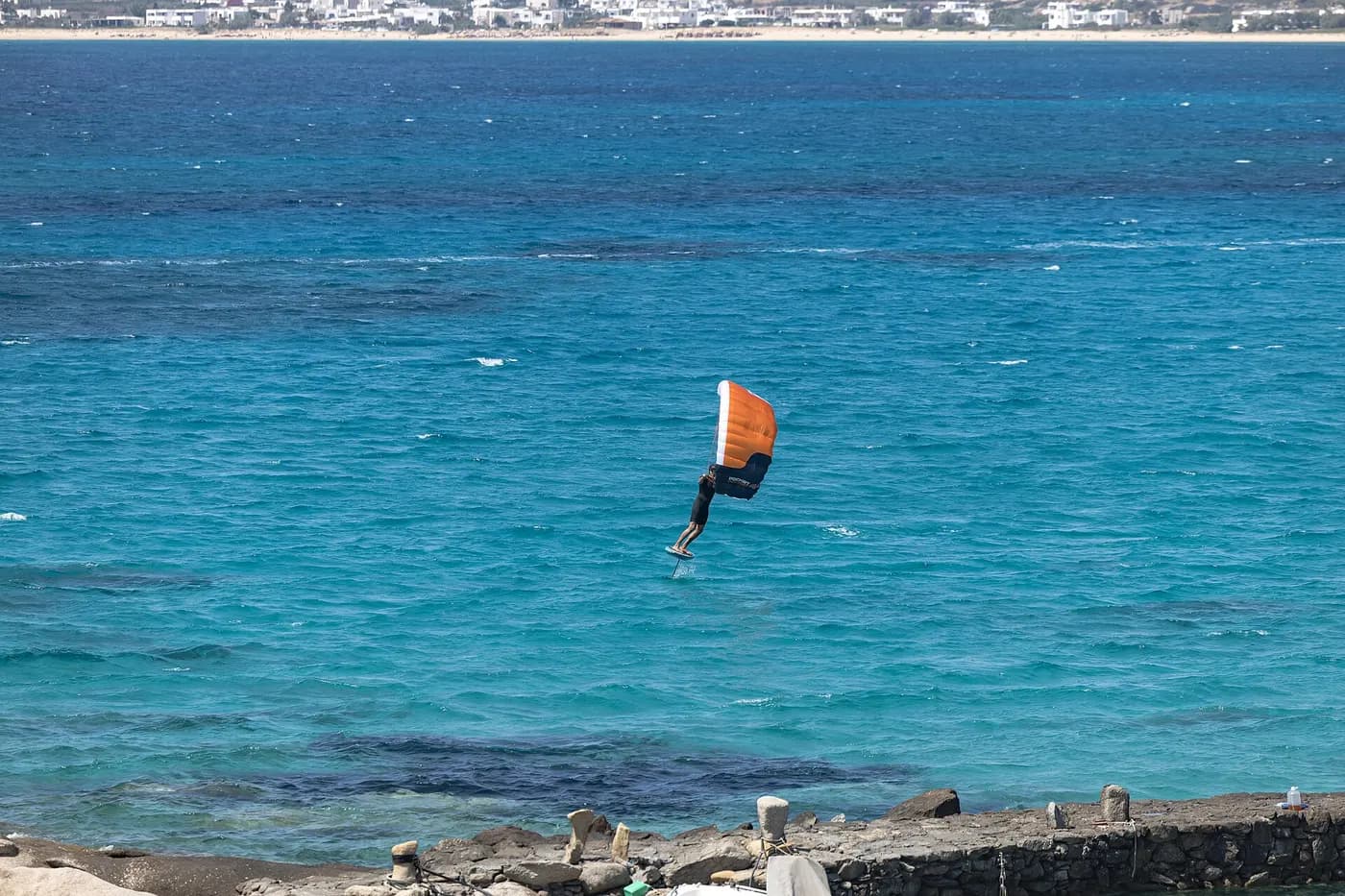
Wing foil (wingfoiling) combines a handheld inflatable wing with a short board and a hydrofoil underneath. You hold the wing in your hands — there is no mast foot stuck in the board like windsurfing. When you reach takeoff speed, the foil lifts the board clear of the chop. That is why light wind often feels usable earlier than classic freeride.
The learning curve is different: wing control, pumping, foil balance, and falling clear of sharp carbon. Same wind-reading skills as windsurf; different falls and depth needs.
Gear overview
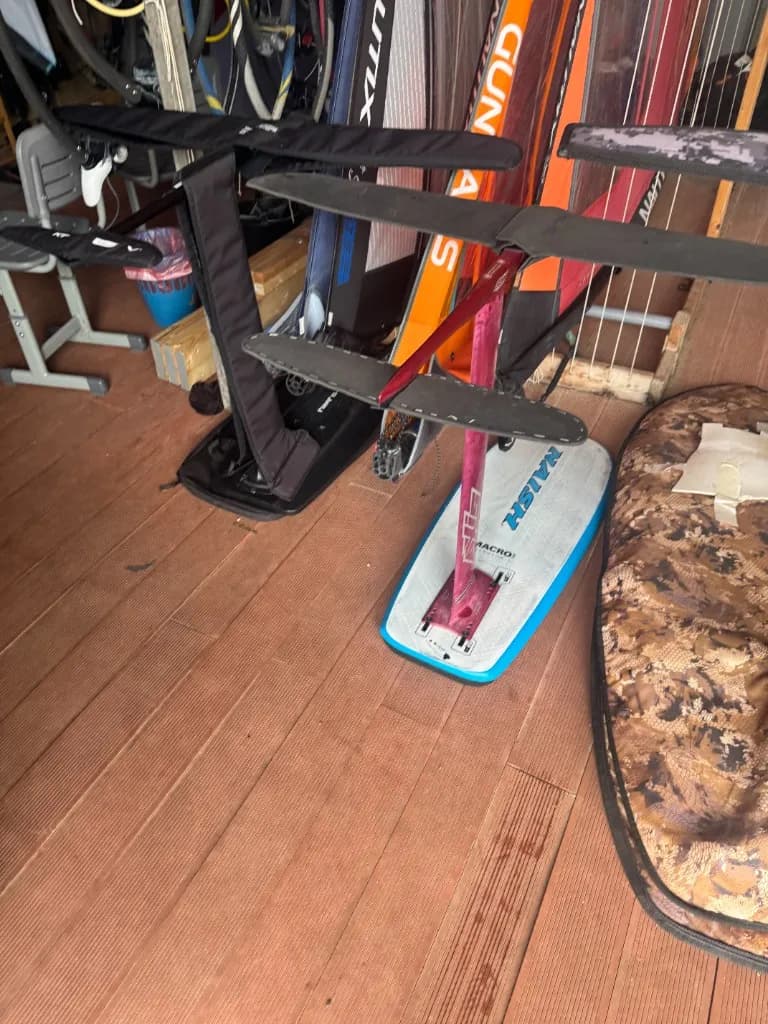
Wing: sized in m². Bigger wing = more power in light wind, harder in gusts. Board: short and relatively thick for early stability. Foil: mast + fuselage + front wing + stabilizer under the board — see the Hydrofoil guide for the underwater parts in detail.
Accessories that matter: helmet, impact vest, leash rules for your spot, and a wing that matches the day’s wind — not the biggest wing in the shop.
How to learn safely
Start on land: sheet the wing, flag it out, move it across the wind window without fighting. Then shallow water deep enough for the foil mast plus margin. Wear helmet and impact vest from day one.
First water goal is not flight. Steer the board with the wing while the foil stays submerged. When speed builds, ease weight slightly back to lift, then return forward to stay level. Fall away from the foil — never dive toward the mast.
Wing handling
Neutral / flagged: wing tip points so power dumps. Powered: sheet in and the wing pulls. Keep the wing high enough to clear the water, low enough to stay stable. Over-sheeting in a gust sends you over the nose or into a sudden lift.
Practice switching hands and 180° turns on land until they are boring. Water is the wrong place to invent wing grammar.
Takeoff and flight
Build speed on a reach. Soft knees. When you feel the foil load, a small weight shift aft starts the climb. Look ahead. If the nose rises too fast, move weight forward and ease the wing. Touch down softly, rebuild speed, try again.
Long early flights feel good and teach little. Short controlled flights with clean landings teach more.
Wind, depth, weather
Many riders are happy in roughly 6–12 m/s with a mid-size wing. Gusty days punish oversized wings. Foils need depth: mast length under the board plus clearance over weeds, sandbars, and people.
Use /weather Windy map for the spot, watch direction shifts near shore, and check live gusts. Wingfoil does not remove weather discipline — it changes the gear.
Vs windsurf freeride
Windsurf: sail fixed through the mast foot, boom in hands, board usually stays on the water until planing. Wingfoil: free wing + foil flight. Falls near a foil are more dangerous. Freeride boards like 230/180 are a different toolkit — use the Board tab for sail sizing when you windsurf; for wingfoil, size the wing to wind and body weight with a coach or school chart.
Common mistakes
Oversized wing on a gusty day. Trying to fly before you can steer on the water. Looking down at the foil. Foiling in swim zones. Skipping helmet because “it is only light wind”.
Fix: mid wing, depth check, helmet on, flight only after calm steering, fall path planned away from the foil.
Progression and sessions
Session plan: land wing drills → water steering → short lifts → longer reaches → first gybes later. End the session while you still have clean decisions — fatigue makes foil mistakes expensive.
Log wind, wing size, and what felt overpowered. Next time you will choose faster.
Pumping and touch-and-go
Pumping the wing and board can add speed for takeoff in light wind. Small coordinated pumps beat wild flapping. If you are not moving after a few pumps, change angle to the wind or upsize the wing next time — do not exhaust yourself beside a foil.
Touch-and-go drills: lift for three seconds, land soft, repeat. This teaches pitch control faster than one lucky long flight.
Gybes and tacks on foil
Foil gybes need speed in, a calm wing hand transition, and pitch control so the foil does not breach mid-turn. Learn wing gybes on the water first without demanding flight through the whole turn.
Tacks on foil are advanced. Until then, come down to the water, turn, and rebuild. Ego turns next to other people are how gear and skin get cut.
Choosing wing size
As a rough starting map for an average adult: light wind wants more m²; strong wind wants less. Gust factor matters — a 9 m/s average with 14 m/s gusts is not a nine-metre wing day. Schools often lend two wings so you can swap after the first run.
If your arms burn in minutes, the wing is too big or your technique is fighting the wind window. Flag out, rest, downsize.
After the session
Deflate slightly for transport if your brand recommends it, rinse zippers and handles, dry away from direct oven heat. Check foil bolts again — sand eats torque. Note wind and wing size in your phone.
Wind window and wing angles
The wing lives in a wind window similar to a kite, but you hold it in your hands. Power rises as you sheet in and place the wing where the wind fills it. Flagging / neutral dumps power so you can rest or fall clear.
High wing: more clearance from chop, sometimes less stable. Low wing: more power and risk of dipping a tip. Keep the wing flying, not swimming. A dipped tip in gusty wind can yank you off the board toward the foil.
Learn to move the wing across the window without looking at it constantly. Eyes belong on the water and your line — especially near other people.
Foil track position for wingfoil
Moving the foil aft on the board track makes takeoff easier and the nose livelier — good for light riders or light wind, bad if you porpoise. Moving it forward delays flight and stabilises pitch — useful when gusts keep launching you.
Change track position on land, mark the holes you like with tape, and test on a calm reach. Do not invent a new track setting mid-session after every fall.
Waterstarts and beach routine
Beach: pump the wing, check leash policy for your spot, walk in with the foil pointed away from people. Waterstart with a wing: board across or slightly off the wind, wing powered enough to pull you up, foil submerged, then steer into a reach before hunting flight.
If you cannot get on the board cleanly, shrink the problem — shallower practice without demanding flight, or a larger more stable board for a few sessions.
Self-rescue with a wing and foil
Deflate or flag the wing as your school taught for towing/paddling. Keep clear of the foil while swimming back to the board. On some spots a short swim with the board as a raft is safer than fighting an empty wing in a lull.
Practice packing the wing on the beach until it is fast. Panic packing in deep water wastes energy.
Wingfoil in gusty thermals
Afternoon thermals can jump from friendly to violent in minutes. Start with a wing you can flag easily. If the first three gusts feel like fights, downsize before you get tired — fatigue plus overpower is how foil injuries happen.
Watch land features that shed gusts: cliffs, gaps between buildings, river mouths. /weather live gusts help; your eyes on the water finish the job.
Equipment progression budget
Borrow or school-rent through the first 10–15 sessions. Buy a mid-size wing and a stable board before a quiver of tiny high-aspect wings. The expensive foil upgrade can wait until you fly reaches without panic landings.
One solid helmet and impact vest beat a third wing you are not ready to use.
Common plateaus
Stuck unable to fly: usually not enough speed or too much aft weight too early. Stuck only short flights: practice touch-and-go and look ahead. Stuck crashing every gybe: separate wing turns on the water from foil turns in the air.
Write down wind, wing size, and one cue per session. Patterns appear after a week.
Leash and spot rules
Some beaches ban board leashes with foils because a leash can yank the foil into your body. Follow local rules. If you use a wing leash, practice releasing it under control.
Ask the school where the teaching lane is and stay out of it when you are free-riding.
Wing size versus wind and rider weight
Heavier riders and lighter wind want more wing area. Lighter riders and stronger wind want less. A mid-size wing you can flag in a gust is safer than a huge wing that planes early and then owns you.
On /weather, read average wind and gusts together. If gusts are 40% above the average, size for the gusts, not for the pretty average number.
Falling away from the foil
When you feel a crash coming, try to fall upwind and away from the board’s path so the foil does not track into you. Push the wing into neutral as you go. Never dive hands-first toward the mast track.
After a fall, locate the foil tip before you swim back. Approach from the side of the board, not from behind a submerged wing.
Touch-and-go flights
Early progress is short flights: lift, fly ten metres, soft touchdown, repeat. Long heroic flights that end in hard breaches teach fear more than skill.
Look ahead to where you want to land the next touch. Staring at the nose invites porpoising.
Heel-side and toe-side basics
Most freeride wingfoil time starts heel-side — comfortable, stable, easy to look where you go. Toe-side comes later for gybes and transitions. Do not force toe-side while you still panic on heel-side flight.
When you do try toe-side, use flat water, a wing you trust, and accept short attempts. Film from the beach; toe-side posture errors are obvious on video.
→ Find your board and sail on the wind map